
Long read
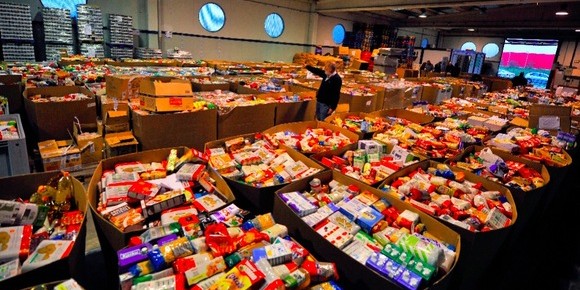
Now I’ve no issue with food banks per se. I understand that they are there as a last resort for many people and many people rely on them.
HOWEVER. I read recently in the Guardian, food banks are announcing how they are fulfilling a steady gap between what government benefits offer and the real cost of food, energy and every day basics.
Besides the fact that government recognition for these charities also puts money in their founder’s pockets, the data they are going from is biased: it comes from the people coming in for food. Whilst this may seem an obvious assumption, I learned not so long ago that it wasn’t hard to appear “destitute”. Additionally, the assumptions behind the use of food banks makes haphazard guesses as to “why”. Presumably because the people making decisions have no reasonable experience of what it’s like to be poor.
If your life is constantly ravaged by unease, inconsistent income and an uncertain future, what do you do? Look for ways to improve your situation. There’s evidence of it, everywhere. People might not be very good at it, but they try or they give up.
Even people who look like they’ve given up, beg borrow and steal if they want something badly enough. And there’s something quite thrilling about getting something for free, especially food, when you’ve been brought up to believe you’re entitled to eat simply because you’re a living, breathing human.
That’s the thing about food. It’s a necessity, but we can live without it for enough time. And if you’re not that fussy, free tins of basics, bread and milk is great. The problem is, people aren’t starving, they aren’t gobbling up that bread as soon as they get handed their 3 day “emergency” package. Those who have never been in poverty might reasonably assume that people accessing an “emergency package” would be in a state of emergency. But what do people class as a food emergency? ‘Not enough food to survive’ doesn’t appear to be the definer because every food bank I’ve stood outside to observe, has quite a large chunk of people in attendance who are overweight. “not enough money to buy more food” seems to be the best suggestion I can find from trawling social media and speaking to those who refer people to food banks. Therefore the misleading definition of food banks drives the wedge deeper between the haves and the have-nots. More appropriate phrasing might be “preventing an emergency” or “managing a social issue”.
Additionally, from my own scouring of groups, I find people complaining about the offerings in food banks because they can’t prepare it. I personally make use of food banks without even visiting them. Many people I know go to food banks and when I visit their house, I get handed piles of tins of things they “don’t like” whilst they order a takeaway. I take three young people to Lidl on occasion to help them shop and make use of not having to carry their shopping home, and they fill their trolleys with processed food. They could make a lot of the dishes themselves and the ingredients would be about the same price if not more than the cost of the processed food.
Many of the young people I visit don’t cook anyway. And when I cook with them, they express hesitancy and anxiety over what to put in or how to prepare it. I wonder if it’s a learned helplessness as they happily dig into a ready-meal or oven cooked processed food, with no consideration for the ingredients. One guy expressed continual frustration when I cooked his favourite meal with him: lasagne. He kept saying “It doesn’t taste the same”. In the end I dug out the packaging from his Lidl lasagne and we went through the ingredients and tried to match it. The amount of salt and oil we had to use was a talking point for weeks. One woman loved fish cakes so I tried baking them with her. It was outside her skill set. She got frustrated and irritated on two occasions and “couldn’t be bothered” to try again, opting for Lidl’s version instead.
What we can learn from food banks in my humble opinion, is that food is something a lot of people don’t want to pay for. And the food they do want to pay for, they don’t know how to prepare thus perpetuating a cycle of reliance on processed food. Even if we take this information and teach people other ways to get healthy for free, we also limit the opportunities for them to do so. Encouraging people to make and grow their own food is a little callous given that large swathes of the population don’t know how to do it, haven’t access to lifestyles or homes that incorporate it and have been brought up eating what they want, when they want, without having to learn the skills to prepare it.
Simply “teaching the young” isn’t enough. Children all politely witter on about healthy eating in school lessons where they are rewarded for such behaviour. But give any child a lollypop and most will take it. And children need opportunity to explore and make their own food for it to catch on. I teach vegan and veggie lessons but I know from the children that are going home to fish fingers chips and peas because their parents are the same as my “friends”, unable to cook, unwilling to for-go tasty processed food that they can’t make from scratch and experiencing generational poverty.
We can’t ignore the impact of the current older adults who pave the way for younger entry level society candidates, who grew up in a different type of poverty. Generations don’t just disappear once they get to adulthood, they become generation specific adults. Silent generation poverty was very different to the poverty experienced by the following generations. And each one has influenced the next.
Some of my friends are people in their eighties. Yes. Over the age of 80. Not born in the eighties. I visit them for coffee, help them with daily tasks and talk to them. Not for a paycheque. I’ve learned a lot. Some of these friends had the capacity and privilege to grow their own food but their own education limited their ability to pass on their knowledge. Used to just following their own parents and listening to authority figures, they were never motivated to reason with their children. Some of their children may have ended up knowing how to grow their own food out of luck, interest or forced environment such as farming families. Many of them were born into a generation where they didn’t need to: unconvinced by their parent’s vegetable plots and excited by the outcomes of post war commercial food production that wasn’t restricted to seasons. With food being cheap and the silent generation having experienced years of inconsistency and uncertainty, many of them bought into consumerism, too.
Consumerism in post war Britain was not the same as consumerism post 9/11. Nobody asked why food had continued to be cheap. We complain about the cost of food, now. But food has always been expensive. Good food, that is. Commercial production started off as a means to make good food accessible to all. Rearing your own pigs or maintaining your own crops takes time, land and money. Transporting produce from the farms to people living in cities and slums, where gardens were absent or weren’t big enough, was expensive therefore people in these areas were more likely to eat tinned or preserved food. Even in areas with a variety of shops, “food” as we know it wasn’t for sale, ingredients were.
To write this piece, I read various things, one of which might be of interest: https://www.historyandpolicy.org/policy-papers/papers/regulating-uk-supermarkets-an-oral-history-perspective
By the boomer generation, multi shops were booming. Even if you had enough land, growing food required attention and time that many people didn’t have. People worked more, particularly women, and ready-made food had appeal amongst those who knew how to prepare their own dishes, and those who didn’t. One comment in the above link stuck with me: a young married woman being ridiculed by an older butcher over the amount of meat she was purchasing. Self- service took away this element for the boomers who were making their way in the world.
I see the impact of poverty as children is one possible reason for obesity in this current generation of older adults: if you grew up with little and suddenly could afford a lot (or you grew up without skills and suddenly could buy read made food without learning how to prepare it), you make the most of food being plentiful. It’s survival, is it not? Before civilisations, people would eat when there was food and go hungry once the food had gone and before more was caught/grown. Makes sense that various demographics of this generation found an appeal in shops that sold everything they could want under one roof and all they had to do was mix things together and heat things up. Ready-made or prepared food took the customer further away from the ingredients, and as I’ve learned through my older friends, not all families passed on their skills.
Subsequent generations know no different, but the impact doesn’t stop there. For Generation X, unless your family trade or business was involved, you were a consumer. In the late 60’s and 70’s Resale price maintenance (the ability for manufacturers to set the price their products would be sold for) was being shoved out the door over it’s misuse. At the farming level, this allowed poorly regulated food to be priced higher and even before RPM decline, large supermarkets with capital began to open their own farms to be able to set prices that suited them (https://www.economicshelp.org/blog/9150/business/resale-price-maintenance-rpm/ ). Consumers then had choices: buy from independent sources that were priced by independent farms, farming groups and manufacturers or buy from supermarkets that were cheaper?? At the time, the food itself was largely produced in a similar manner, the lower cost was due to business strategies that fed off the back of supermarkets having access to cash. The food itself was still food and therefore the cost had a greater impact on the decision of many.
And this is where generational poverty has another impact. In the interest of competitive pricing seen amongst supermarkets in the 80’s, the price of food became all important. For the silent generation, now gamely managing grandchildren and pensions, who had experienced famine, loss and rationing, the price margin was an incentive that tapped into their early experiences. For Boomers who had grown up in poverty and were now working and bringing up children alongside a reformed NHS and education system, the option to eat better and at a cheaper price, was an incentive. For Generation X, youngens at the forefront of change, the overthrowing of the greedy people growing, rearing and making the food was short lived success. They weren’t replaced with altruistic supermarkets; supermarkets were there to turn a profit.
Supermarket profits also relied on being able to keep their customers, they had to keep food cheap. Food wasn’t requested by customers, it was farmed and placed in stores awaiting purchase. To keep their customers happy, supermarkets had to keep shelves stocked, thus waste started to increase. Mass farming only went so far and fresh meat and vegetation had costs that were liable to fluctuate. A bad crop, a drought, infected livestock and the ever-increasing regulations all had an impact on the reliability of drawing a profit and supermarkets employed a range of techniques to maintain profits. Farmers and manufacturers who were interested in maintaining food quality over cost were subject to the same challenges and many couldn’t compete, and shut down. Dried and preserved foods became a cheap option in the 90’s and many of those living in poverty relied on tins and packets unless they happened to still produce their own vegetables or raise their own chickens.
We know that humans can live for a long time on dried and preserved food. But items that lasted a long time on the shelves, also lasted a long time in the pantry. To keep customers coming through the door, supermarkets needed to make fresh food more affordable. One way they did this was through processing meat. Sausages are a good example of this. Children born into the bottom end of poverty in the 60’s will have seen sausages strung up, maybe even tasted them on occasion. Children born into the bottom end of poverty now have a different idea of a sausage, one that is highly processed and has much less meat in it, but they probably eat them regularly. Enhancing the price margin of processed meat was more reliable. Emulsifiers, chemicals and substitutes had been around for decades (https://www.sciencemuseum.org.uk/objects-and-stories/chemistry/food-chemical-history ) and changing the amount of actual fresh meat in the product was one way to keep these items affordable and keep regular profits. Another method used was to change packet sizes ever so slightly. This worked for a long time although now people are starting to notice the size difference (https://www.bbc.com/worklife/article/20180510-the-food-you-buy-really-is-shrinking ).
Then came the freezer. Lots of things freeze just fine, but raw meat has to be prepared differently for freezing. Additionally, the ready-meal/fast-food culture that has taken hold impacted the integration of frozen ingredients as a healthy option, as they had to be thawed before preparing and cooking. Therefore the opportunity for people to eat more healthily at a cheaper price, was still limited by skills: cooking skills and organisational skills. Frozen processed food was better for the supermarket’s profit margins and much of this food even today is still heavily marketed.
Marketing is one way supermarkets perpetuate the cycle. Ingredients don’t come with pictures of the potential meals you could make on the packaging. When was the last time you bought a packet of chicken breast with a picture of a cooked dish on the packaging? Processed food comes with pictures of what the meal supposedly looks like (but rarely does). Supermarkets use their marketing to people who can’t/won’t cook. Sauces can be a preservative, many supermarkets sell packaged chicken or pork with seasoning on that is far more expensive than the cost of the meat and seasoning separately. Such products last longer and increase price margins.
For Millennials and beyond, the impact of poverty seems to be one of the largest contributors to the problems we see today with food. Up to the millennium, transferred depravation was still common, people who grew up in poverty often brought their own children up in poverty. Children living in poverty in urban areas in the 90’s whose parents likely grew up in poverty, were brought up on the cheap food, which was less likely to be the fresh meat and ingredients. If they were in this poverty bracket, it’s likely their parents didn’t know how to prepare food from ingredients and the easy cheap access to processed, dried and packeted foods perpetuated the problem as education was not necessary for survival and reformed healthcare and school left diet on the sidelines. Many children ate food rather than learned how to make food from ingredients. People were able to afford food, nutritious or otherwise, on a daily basis and living in poverty no longer necessarily meant going hungry.
So this brings us to today. And my concerns about food banks. Of course people living in poverty are going to food banks – it’s free food. If you qualify, why would you not? To utilise the data from food banks as proof that benefits are not enough seems a little trite. They can’t possibly make that assumption. They have no idea the real reason all of those people visit food banks any more than I do.
Yes, food is expensive. But benefits would cover adequate nutrition. The problem is POVERTY. Not the food. Not the amount of money. Poverty as a concept. Poverty as a condition. Poverty as a social issue that needs to be solved in a way that isn’t just “higher benefits”. Let me be clear, I still think living monies are a piss take in the supposed ‘developed’ nation known as “Great Britain”. I just think poverty is not just about this bottom line and the constant focus on ways to prove that it is, are just causing more smoke and mirrors to the actual problem. Generational poverty has left people unable to cook for themselves and cheap access to processed food has targeted people in this bracket and perpetuated the problem. Poverty impacts mental health and food is a pleasure, a way to cope with poverty.
Are people going hungry? More to the point, in a country that accepts poverty exists (even if it’s attempts to address it are problematic), do we just have to accept that people will go hungry or do we agree that in our western cultures everyone should be fed above starving? What is that supposed to look like? How starving would a person have to be before they were given food? How many days would they have to live without it before they would get it for free?
People are suffering for a number of reasons, but a lack of food is not the most notable problem. How people deal with food is far worse. The easy access to processed ready meals and the impact of generations of poverty is worse. People aren’t given food vouchers to spend on food as part of their benefits. Money can be used for whatever people want, and they are free to use it for what they want. The same people who post on reddit and Facebook about visiting food banks, also post pictures in fashionable clothing, smoke cigarettes and decorate their homes. I don’t buy these things. I have a stack of books holding up a lamp next to my bed, two of the rooms in my house still don’t have curtains and I’ve been here over a year. I do know how to eat, though, even if sometimes I can’t cope with it. But also, and I cannot stress this enough, I have the cognitive and emotional capacity to cook; I’m not in poverty.
Being able to get a referral to a food bank isn’t hard. Any professional can do it for a number of reasons. A bit of free food is the least they can do for people whose lives are and always will be, difficult. Counting the number of food bank attendees is like counting the number of people who enter a job centre- a pointless waste of everyone’s time, but someone on government payroll gets paid a nice little sum to do it so that the government can use such figures to their advantage and make it look like they are doing something. There are many individuals I’ve learned who are genuinely struggling to put food on the table, but it’s food they know and want that they can’t afford, not basic nutrition. And food banks are not exactly pushing basic nutrition. Much of the food offered is processed.
In my experience of more schools in areas of depravation than I can count, I know of ONE child who was clinically malnourished. According to such a finding, we should be celebrating. Not so fast. The nutritional deficiencies indicative of a poor diet (not a lack of food) make themselves known in behaviour: lack of emotional regulation, lack of concentration, easily distracted. And those make up more than half of Every. Single. Classroom. We are failing. But not because kids are going hungry.
Free school meals for small children are available, but a child could easily have the free school meals every day and not be eating a healthy diet. If the child didn’t like the food or didn’t want to eat it, they could just have bread and butter, a glass of milk and desert (of which there is usually a cake/cookie style option). If that same child then went home and ate processed “beige” food, then their nutritional needs are not being met and schools have enough to do without parenting children during lunch time and making sure they eat their vegetables. A lot of the schools I visit offer all children toast and fruit at no cost to the parent throughout the day. I bring in carrots and apples myself. These children are not malnourished. To define their poverty as a lack of food or access to food would be diminishing their experience of poverty and the cycle of misunderstanding will continue.
Poverty is about so much more than just no food. When you’re part of the riff raff down on the breadline, the education is poorer, the opportunities are less, the stress and frustration fed down from the adults causes more adverse childhood experiences. The police don’t help you, the doctors brush you off. Even the unhealthy coping mechanisms are different: if you’re rich and unhappy you can buy cocaine, if you’re poor and unhappy you can buy “council powder” which is about 0.01% cocaine, 50% benzocaine and a myriad of other crap.
The saddest part about poverty is the lack of access to housing and support, which suddenly jumps when you have a child, which means a lot more people in poverty have children they aren’t capable of looking after, because they need/want/expect it will bring them benefits because their education was insufficient to acquire a decent job. School before the late 90’s was inconsistent and unfair at best and a down-right waste of time at worst. Even now, postcode lottery is a current challenge. This is so sad. How many young humans could have done other things in life, learned other skills, produced something worthwhile, but instead ended up managing one of the most tricky jobs of all: bringing up a child or two, to make sure they had a home to live in and could eat.
Other countries offer universal income so that young people can drive innovation with a roof over their head. We can’t bring that here, now. People now would sit back and do nothing. Can we blame them? Aren’t we tired of working so hard for little gain? Other countries where inequality is greatest wouldn’t be able to, either.
The number of malnourished parents I meet in depraved areas is astonishing. And I don’t just mean thin and underfed. Overweight and lacking in nourishment is something that needs to be considered. With free school meals for smalls in Scotland, it’s hard to tell if a child’s parent knows how to cook when they enter school because there’s no pack lunches to judge. Three schools in three different areas ran cooking clubs for parents to teach them how to cook basic nutritious food from cheap ingredients using basic equipment, due to an overwhelming response to a survey filled out by parents and children. An average of 10 parents joined in, all mothers. Those who didn’t join in continued to be spotted down the chippy or in the Off license.
I undertook a social experiment. Technically I can’t write up my findings because researching children is tricky business, ethically. But some of the comments and responses that children have expressed during my carefully worded lessons were eye opening. And children are the most generationally relevant group to ask. For example: the number of children who expressed they didn’t like vegetables who said their parents didn’t like vegetables. The number of children who would rather eat bread and butter or a biscuit than eat something they didn’t like and coincidentally the number of children whose parents and caregivers allowed them to do this. The number of children who put bread and butter as their top favourite “easy” food, and the fact that not a single child put an apple or a carrot. The number of children who turned their nose up at my “vegan sausage rolls” but then expressed surprise delight after tasting their own concoctions when presented with a variety of plant-based food (vegetables), spices and herbs wrapped in school baked vegan pastry.
Food is no longer seen as a necessity, it hasn’t been for a while it seems. When I was a child and didn’t eat my dinner after saying I was hungry, my mum would say “if you were starving you would eat it”. I didn’t understand at the time but she was right. The way we consume food has made it that way, though. I grew up being able to eat whatever I wanted. If I was hungry, I wanted to eat what I wanted, not just feed a starving belly. I didn’t even know what a starving belly felt like until I was late into my teens and spending most of my money on alcohol and not visiting home nearly often enough for food. When I was 31 and I stopped eating properly for 3 months, I barely consumed enough calories to keep a small child alive, but the diet included oranges, tomatoes and the odd microwave vegetable pot covered in cheese. I lost 2 stone, but because I wasn’t even close to malnourished to begin with, I just went a bit thin for a while.
Preventing malnourishment isn’t hard. After some careful research using nutrition apps that log nutrients not just calories, I found a rough diet that covers the basics and doesn’t cost that much. A bowl of healthy cereal and a piece of fruit for breakfast, fried leafy greens and an egg on toast for lunch and a multi vitamin. This left me able to eat pretty much whatever I wanted for dinner and keep a diet that seemed to cover most of the necessary nutrition intake for a woman. The cost of following such a diet was pretty low for me for one reason and one reason alone: I was happy to eat the same food for a week, had the time to prepare things, the space in the fridge to keep it and I wasn’t emotionally struggling. And this is where I have learned other people struggle. Food is for pleasure for most people, not just for nutrition. Even eating “low cost” basics starts to cost money when you want variety. Food from cheaper shops tends to not last as a long, which puts people off. Not the mention the visit to the supermarket is sensory overload.
Maybe we need to separate out the necessary food from the choice food. Food banks really are plugging the gap, but is it the wrong one? We don’t have a universal income, but if we agree that every human in Britain deserves to be fed healthy basic food (even if they choose not to use their hard-earned moolah on it) then maybe basics need to be free for everyone. Go from there. Why should someone who works hard have to pay for milk if someone who doesn’t work at all (regardless of whose fault that is) get it for free?
The skills and opportunity to bake your own bread and grow your own veg, are missing from society BECAUSE of social expectations and decades of a lack of nutrition education, so maybe basic bread, tinned veg and a tub of marge should be free to all. Maybe milk should be free to all children like it used to be. Maybe children should be able to go into any public funded organisation and have a fruit, bread and milk for free just to be safe. But then if we decide everyone deserves to eat, how far do we take this? What else do we deserve to have?
 FaerieFalls