10 minutes.
I struggle with transitions. I have learned this after many years of managing my own life and trying to get by.
I have yo-yo-ed between thinking I hate mornings and that I have sleep problems. There have been times in my life when I have taken sleeping pills to get to sleep and times when I’ve turned the alarm off in the morning and nestled back in between the sheets.
Early years were fraught with anxiety in the mornings. I loved school but hated getting up. I was that child who repeatedly came downstairs hours after my mum had put me to bed with ten books and a lava lamp with utter peace outside. We lived in a semi-rural area with huge oak trees and horses at the end of the lane. We weren’t close to anything other than a corner shop and video store. For reasons unbeknownst to me or my parents, I had a habit of running away. My mum drove me everywhere. Just to make sure I got there, I think. I remember many mornings of rushing through an empty playground with my mum’s heels clapping next to me. She was terrible for picking me up on time and I spent many hours waiting outside of community centres, sports halls and leisure complexes. We ate late because mum would sit in her office and forget the time.
When we moved, I attended a ‘secondary modern’ or “community comprehensive” where I was years ahead of most of my peers academically. School wasn’t exactly tough and mornings became a little easier as I lived a half hour walk away, that I could have done in 20 minutes if I got a lick on. My mum had always been perpetually late for everything and she also was feeling guilty for our family situation. For the first few years of ‘big school’, my mum worked from home, largely because she broke her arm badly and would often drive me in at 5 to 9 in the brand new automatic, despite one of the main reasons for the big house in the housing estate in the town was to not have to do this. My name was consistently on the late-list and I regularly missed tutor sessions and waltzed in late to first period.
I spent the latter years of school life coming home late or sitting on the computer or my phone into the early hours, until my mum turned the internet off or hid my phone charger. At this point, my dad lived in a different place and worked shifts, only appearing to look after my little sister as my mum worked in London and was on the 7am train out of Winchside. My dad always maintained that leaving teenagers alone was the best way to deal. I’m not sure why. He saw plenty of examples of wayward teens. There was nobody to regulate my mornings. By the time I got up, the sun was often beaming through the window. I made friends with another girl who lived nearby and who’s family situation was similar, except her dad was the parent she lived with. He was a contractor who dropped her younger siblings off at breakfast club and left her to fend for herself. We spent many mornings sitting smoking out her back door and watching films on the flat screen. The school would call both of our parents and we would text in the evening about the bollocking we had both received. But as our respective parents still had to get up and go to work each day, there was nothing they could do. In the end, her dad took a different job and moved the family closer to his place of business. That ended that.
The rest of school was a blur. I ended up involved with the wrong crowd, barely attending school at all. I flew through my exams in pure luck and got accepted to a decent college. I thought this would be the start of the new me. New friends. New routine. I got an office job booking housing viewings on Saturdays and spent week day evenings babysitting. Each morning I set my alarm for half 5. Bleary eyed, I’d stand under a cold shower until my fingers were blue. Giving me just enough time to dry my hair and put makeup on that covered up the bags under my eyes. Late nights were normal. I got by on 4 hours at best, sometimes no sleep at all. By second year, I couldn’t concentrate on my studies. By this point, my reputation for being a middle class brat was set in stone. My attitude problem was discussed at length by smartly dressed adults telling me how disappointed they were. Long gone were the kind support workers of school. College was seen as a choice. What a joke. What 16 year old knows what they want to do? All of us, even the most successful, were there because someone told us we should be.
From then on, there was always a reason I had to get up. I never managed to balance the amount of rest necessary to be productive with my days. I found ways around it. I would make the most of the days I achieved a good night’s sleep by fluke; working on assignments for 12 hours then sleeping through the next day. I stopped talking to people every day. People got used to not hearing from me for months then seeing me for a week long blow out. My parents didn’t have any control anymore as I didn’t live with them, but they saw my good grades as evidence of a job well done. After years of being told there was nothing wrong with me, that I was just lazy, I hid my struggles. Life messily reflected my state of mind: I worked for a bit, studied a bit, just about got by and then I took week long breaks where I could sleep whenever I wanted and forget about the world. When I was working, I was a frugal hermit. Giving me the chance to wander the world in my spare time without a care.
After a few years, I finally entered university, which just compounded the issue. 5 lectures a week and I was expected to complete readings and assignments in my own time. I never found the seminars very useful and achieved good grades on the assignments by working through the material at my own pace. Looking back, I think I was lonely. I didn’t know anyone else who experienced things like I did. I was too embarrassed to open up about my struggles. Nobody wants to be thought of as lazy. By second year, I gave up work. I’d saved up enough money and had a good chunk coming in from student grants and I was an expert at living frugally. I never ate out. My education was starting to draw attention to the lives of those I had surrounded myself with, and I wasn’t impressed. My lack of reliability or responsibility meant that people I wanted to get to know, didn’t want to get to know me. I lashed out at the constant rejection until my mum pitied me enough to pay for an account on a fancy dating website. And that’s when I met B.
B was impressed with my personality. He was impressed with my parents. He was supportive of the goals I let spill out over bottles of Jack Daniels. He gave me company and he had a life that I had only dreamed of. Nice cars, expensive holidays, a nice little house in a nice little area in a sunny part of the world. I thought I had won the lottery. I knew I had to keep up this pretense of success. A teaching qualification seemed an obvious choice. Short days and long holidays. Now we all know teachers work hard. But I worked in batches. It played to my strengths. I was creative at planning and efficient with report writing. B worked early mornings and the dog never let me go back to sleep after he left at 5. B was responsible. He never had a day off. He rarely stayed up later than half 8 and lived for his Sundays. I still lived off not enough sleep and my brain was exhausted. I started to hallucinate and cried myself to sleep more often than not. The only saving grace was how much I loved my job. I was good at it and the days went quickly once I got there. I dragged myself into work at 7 during the term time, collapsed on the sofa at 5 with my new coping mechanism: food. I spent my evenings watching TV shows alone. In a year I had put on 3 stone and I wasn’t slim to begin with.
B was the first person other than my mum, to take an interest in my struggles. Having been overweight and scrutinized by his own parents, he was kind. He suggested I seek help and I did. Help largely involved medication. The psychologist dangled the words “schizophrenia” and I freaked. The memories of the self medicating years of my youth loomed in my head. If I was going to be medicated, I wanted to at least enjoy it. There sparked a year of spending every holiday away from B in a drug fuelled stupor. I loved it. I thought I had found the perfect balance. But it took it’s toll. I still couldn’t sleep without intervention. My relationship wasn’t good and I still relied on food during the term time to both wake up in the morning and go to sleep at night. A year later, I was almost 18 stone, depressed and chasing anything that allowed me to forget.
I ended up in Scotland. At the home of one of the friends who I frequented when I didn’t have to work. It didn’t work out. My carefully crafted balance was overturned and people who used to treat me well, were disappointed in me. I still didn’t listen. I made every move after that to make sure I surrounded myself with people who made me feel better about my situation. Most of them were incapable humans, many of them had lost teeth. The drugs smoothed over the cracks and every now and then I would find myself in a magical situation that would never have happened if I had had a safe home. I lived for these moments. Staring up at clouds or fireworks or the sun, totally in awe of this life I had crafted. In between these moments, life was dire. I had swapped food for full time narcotics. It worked. I could manage the week days just fine, because as soon as Friday hit, so would the partying. My job suffered. I had no energy to do anything other than the job in front of me. All of the extra parts of teaching that teachers do in their spare time, I didn’t. It didn’t matter, I was only a temporary teacher. I didn’t need to do those things. But the people who did, were the ones getting jobs. Added to that, my skills in child development were preyed upon; I traded childcare for drugs.
Money was coming in, but I was increasingly aware that it was not enough to fund the lifestyle. Life continued in the pattern I had become accustomed to, a few months of work followed by weeks of nothing. Living in a friend’s shed, I met someone else who was enamored by my lifestyle. We were both on our own roller coasters of self destruction and neither of us could see the wood for the trees. We decided to move in together, out of necessity more than anything. Sharing a house with space to breathe was costing us less than staying in our temporary digs. I don’t know what that meant for him, but for me, I was suddenly in control of my own space and I had no idea what to do with it. I sought out friendships to replace the ones I’d lost, no longer a twenty something, I found others who’s lifestyles were similar to my own, only a little over the hill of destructive, and I didn’t like what I could see. People my own age, with careers and family life that resembled my own upbringing, were still unobtainable. The rejection continued from all sides and easy access to drugs provided a hole to run away from it all until the relationship came to a messy end after COVID19. The one consistent friendship from a secure background also ended due to him starting a relationship with my only female friend.
Without a home, or drugs, or friends, my outgoings were minimal. Well-meaning head teachers (only male ones no less) offered me full time contracts that meant I was able to build up a decent nest egg over 6 months. By the end of the week I was exhausted. I knew I’d need a break but was anxious that I also needed a home that wasn’t the spare room of a kind couple who spent their years fostering way-ward individuals. I eventually opened up to my parents after years of avoiding them. As I was now clean, I felt able to face them. I showed them my nest egg and they agreed to lend me money to top it up to 20k. I borrowed money from each parent and my sister and secured a mortgage for my own home. Then my mum died.
The insurance pay out from her job gave me enough to live on without having to do anything. Not a lavish lifestyle, but it pays the bills, I can eat what I want and fund my new coping mechanism: vaping. For the first time in my life, there is nobody telling me what to do. No external force regulating my sleep pattern. No job to get up for in the morning. I started a masters course so I would have something to aim for but otherwise my time was entirely my own.
There are so many things I could do with my time, but just as I had learned all those years ago, sleep and lack of it, hindered me. I had never known self control, only external control. Without external control, I was once again, lost. The damage was minimal this time. My body hinders the lifestyle somewhat. I drink because it’s all I have access to, but I get headaches from a glass of wine. I don’t really smoke, opting to micro-dose for anxiety when I need to. Working in schools since COVID has left me with breathing problems. But it’s probably hindered by the constant vaping that stops me from driving my car off of a cliff.
I never liked routine. Mostly because I could never keep up the routines I was expected to keep. I don’t like going to sleep – I never feel I can switch off and had always relied on tiredness to indicate sleep. I now know that people with Autism and ADHD and Schizophrenia, struggle to respond to their body in the same way. No wonder “sleep when you’re tired” never worked. I struggled to get up in the morning. Turning the alarm off and snuggling back into the sheets. Only, after time, I stopped being able to go back to sleep. I’d wake up, put the kettle on, open the curtains and sit in bed vaping until I was bored. I no longer needed to recover from weeks of full time work.
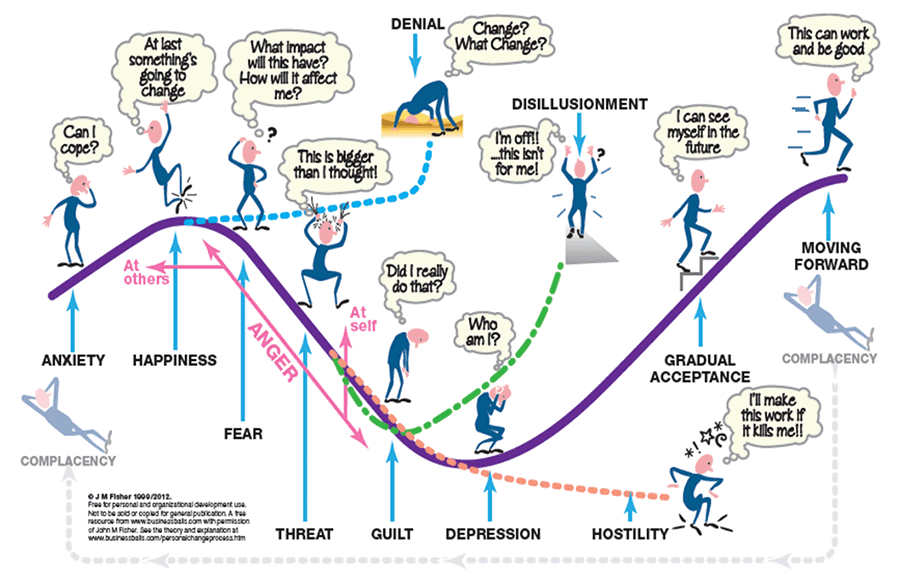
The masters course gave me access to the latest research around my ‘disorders’. I learned that transitioning is difficult for many people. Many people may never know why. Many people may never suffer from it. Or if they do, the external responsibilities in their life keep them going. Many people will have learned routine from a safe and secure place, or self control for that matter. Many people who didn’t, will have ended up with clinical diagnosis that absolved them of external triggers early enough in life that they could get a handle on them. Many people will have found peace and solace in their own little lives rather than chasing the pot at the end of the rainbow. And the many that don’t cope at all, end up like me: hallucinating, depressed, anxious, internalizing their grief and losing the ability to function properly until those little brain malfunctions become more debilitating than a brick to the head. Self medicating to stay afloat until they can’t live without it.
I don’t want to be disabled. So It’s up to me to learn self-control and routine. By focusing on the transitions, I have found the balance I craved years ago. I always wake up at the same time, around half 7 and open the curtains. I spend half an hour or so in bed with a coffee and the internet before moving to the desk by the window. Around 9, I get dressed regardless of whether I’ve washed or not. I wash my face, brush my teeth, make my hair look acceptable. I don’t give myself the extra task of breakfast, I eat protein and nutrient heavy snacks such as nuts and leftover dinner. The process isn’t without its stresses, but without having anywhere to be, or anything pressing to do, I can self-soothe with music, TV shows and browsing the internet. All those spare-time things people do to wind down, I use to motivate awake. By 10/11, I am working, I am concentrating and I am focused. I work maybe 8 hours across the day with frequent pauses, conversations on my phone, episodes of a new show and music to listen to. I try to exercise each day in some way – a walk, yoga, a run on the cross trainer. Sometimes I meet up with friends, but mostly I exist in the world alone. At the other end of the day, I start my sleep prep early. I try not to eat late, but don’t stress if I do. At 9, I am in bed with whatever entertainment I feel like, and the lights turned down. When 11 hits, I turn out the lights, turn off the entertainment, put soothing sounds on my phone, put on my face mask and close my eyes. I rarely see midnight anymore.
There are occasions where the routine is disturbed. Weekends away, nights on the town. But these occasions are less frequent and therefore easier to deal with. I can work tired because I’m not exhausted. I’m not chasing the high all the time. I haven’t got a life I’m trying to avoid. I look up at the clouds, the sun, the rainbows, and it feels magical.
 FaerieFalls